
Proper map navigation is essential for survival, efficient looting, and progressing to higher floors. Understanding key locations and planning your movement can greatly improve your chances of success during a match.
Check the Map Regularly
Open the map frequently to confirm your current position and plan your next objective. Staying aware of your surroundings helps you avoid getting lost and prepares you for potential encounters.
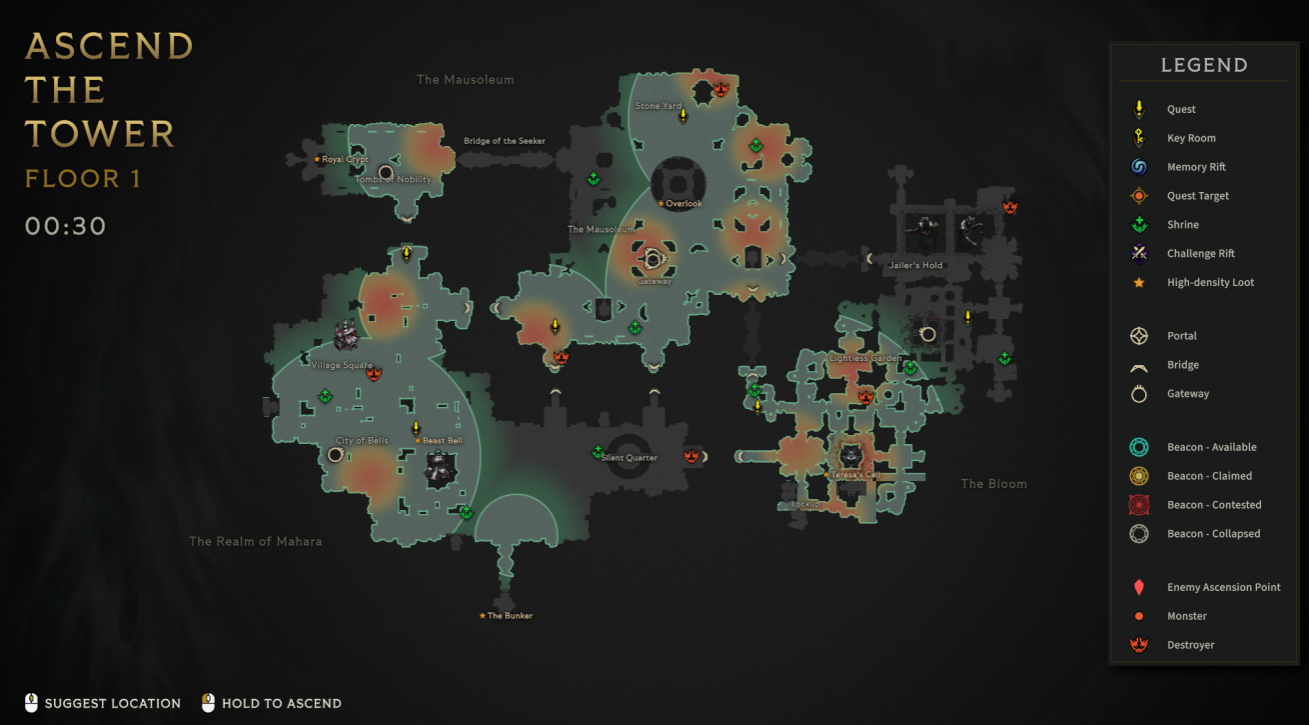
Understand Map Legends and Symbols
The map contains several icons that indicate important objectives and points of interest:
Beacon: Allows teams to ascend to the next floor.
Destroyer: Indicates the presence of a powerful, unkillable enemy. Players should avoid this area unless necessary.
Orange Star: Marks high loot zones where stronger equipment can be found.
Challenge Rift: A special arena where teams can compete against each other for rewards and automatic ascension.
Quest: Locations where players must defeat enemies to complete objectives and earn rewards.
Portal: Leads to a separate combat area filled with enemies and valuable chests.
Bridge / Gateway: Transport points that allow faster movement between locations and safely cross gaps.
Key: Indicates areas related to locked rooms that contain rewards.
Shrine: The in game shop where players can spend shards to purchase items and abilities.
Plan Your Route
Avoid moving without a clear objective. Decide whether to prioritize looting, completing quests, or securing a beacon to ascend before time runs out.
Move Strategically
Minimize unnecessary risks by avoiding high danger zones, especially areas marked by Destroyers. Use bridges, gateways, and portals to reposition safely or escape unfavorable fights.
Coordinate With Your Team
Communication is crucial in team based matches. Share your planned route and regroup at important objectives such as beacons, Challenge Rifts, and high loot areas to increase your chances of survival.
Practice in Non Competitive Modes
Learning the map layout in tutorial or training mode helps improve navigation speed and decision making. Familiarity with the environment allows players to react more effectively during real matches.